Unfolding Voyage
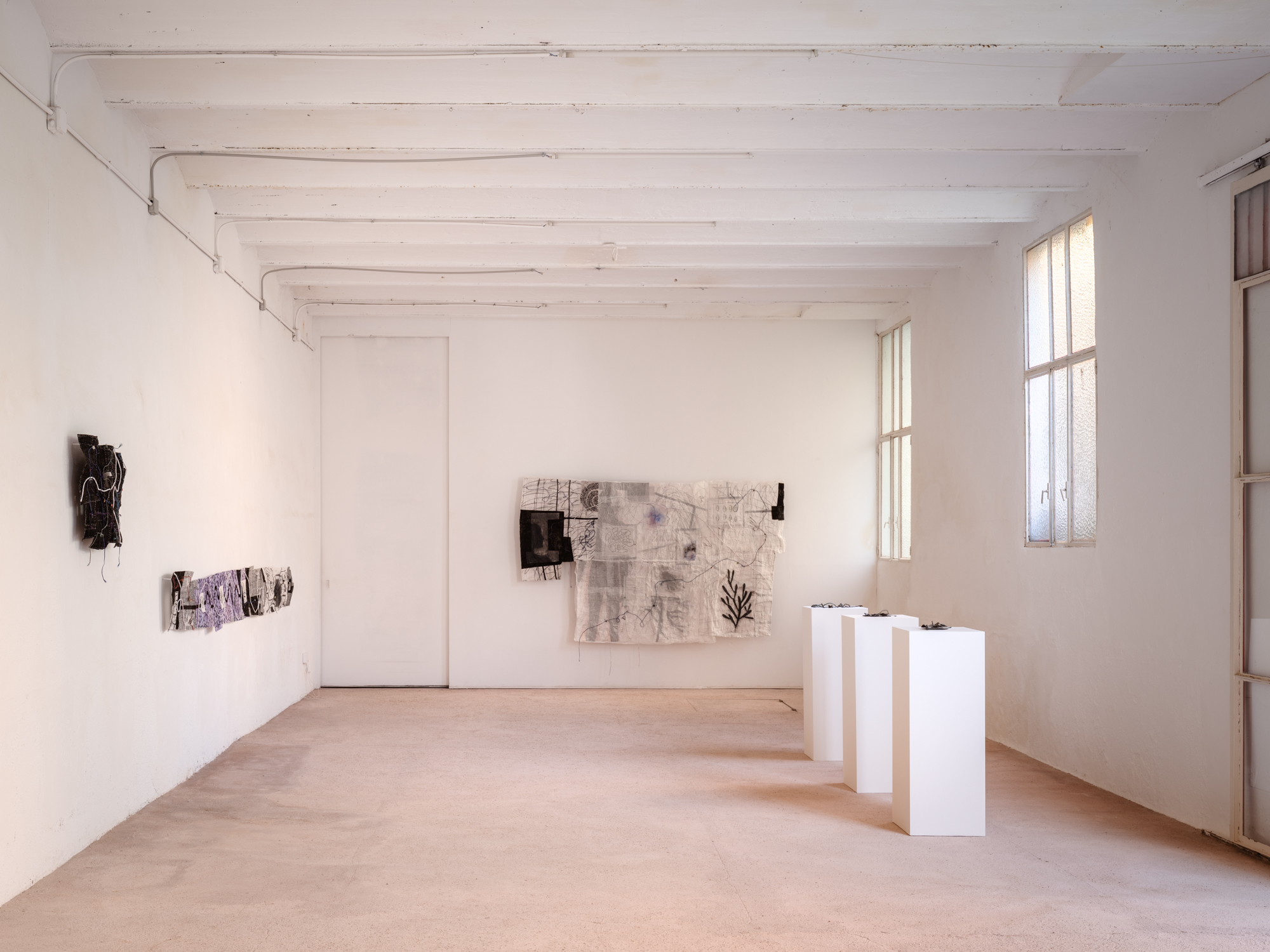
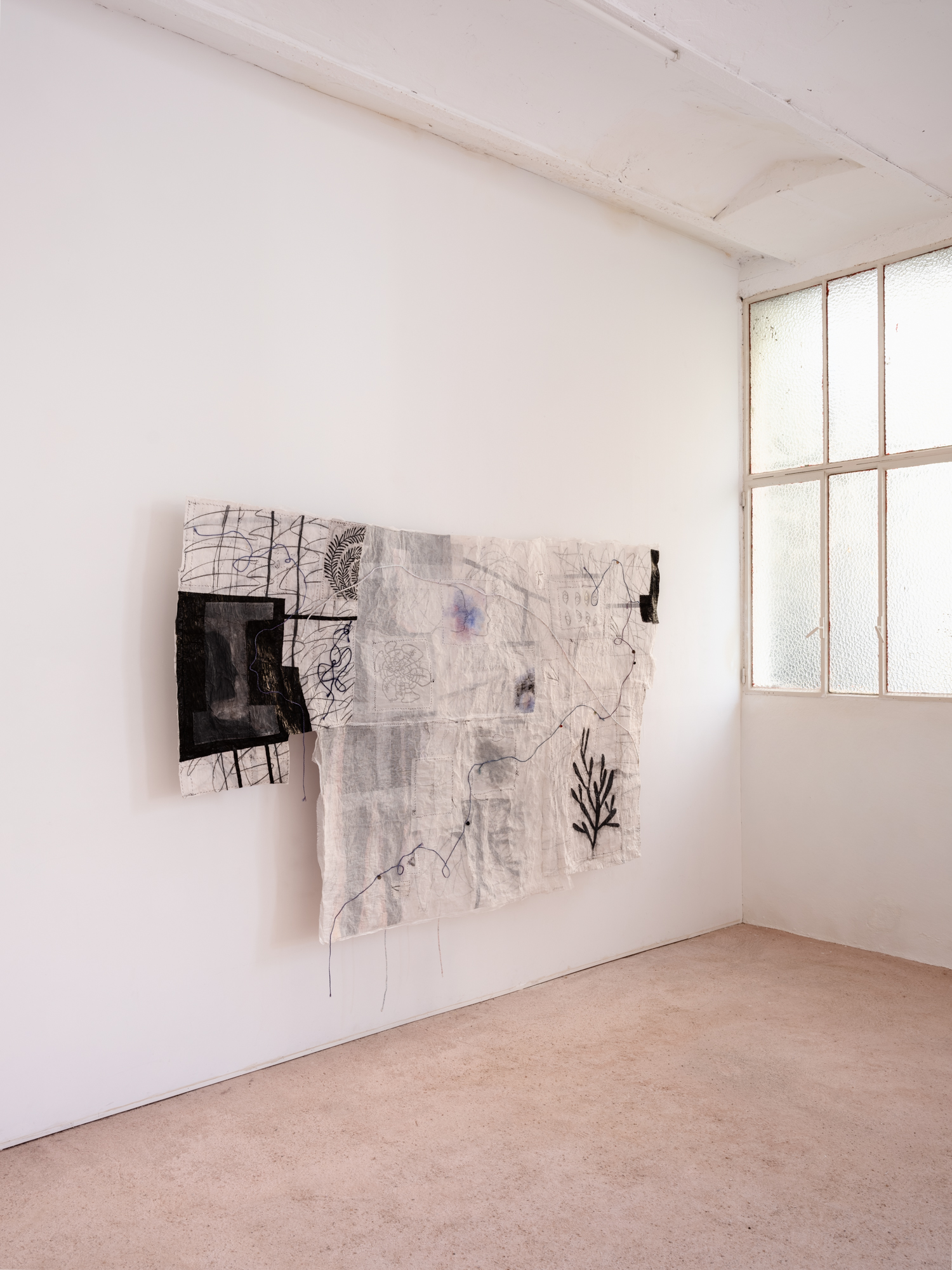
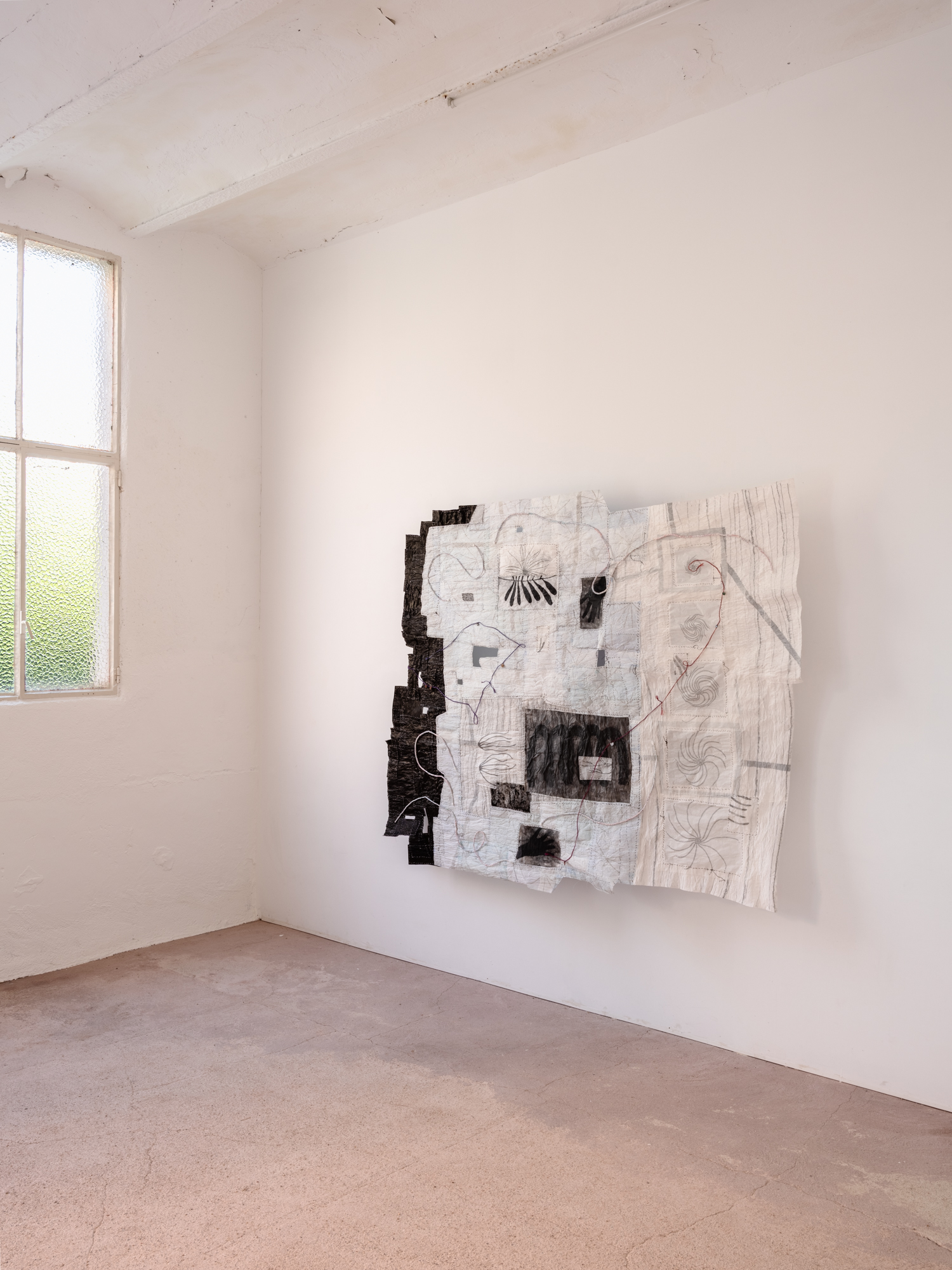
Isabel Nuño de Buen’s works resist flatness, both physically and conceptually. They have a front and a back, an inside and an outside, and in this duality, they already suggest that what we see is only one layer of a more complex terrain.
This terrain—at once surface and depth—becomes a field in which multiple temporalities converge and overlap. Usually, dynamic entanglements such as space and time can never be fully captured. That’s why, rather than treating them as fixed coordinates, Isabel approaches them as relational processes, revealing them through movement, repetition, and layering. Mapping becomes a strategy for making these entanglements partially visible—not as static forms, but as shifting patterns of interaction. Through rhythm and accumulation, space thickens with time, and time becomes perceptible in space.
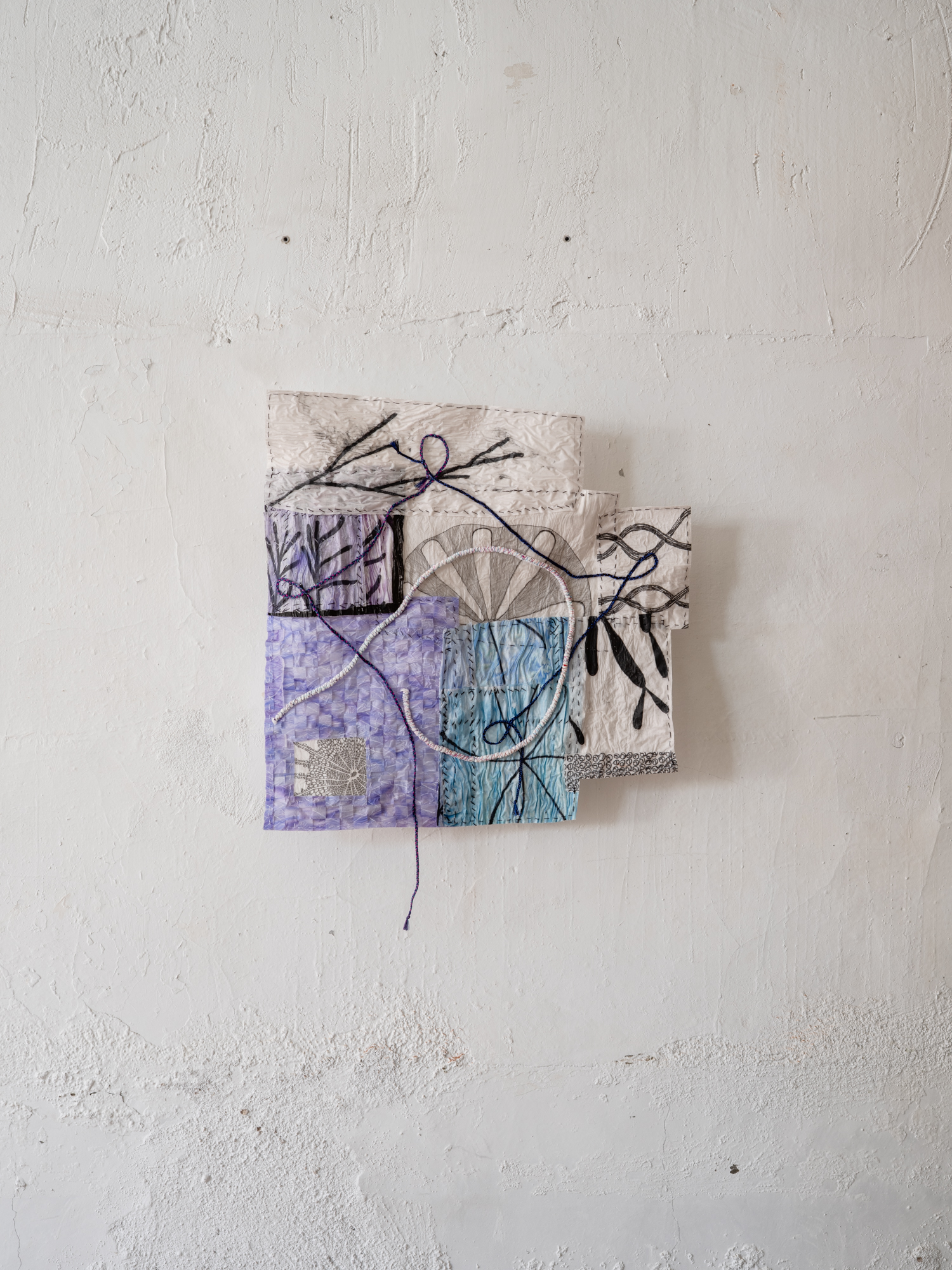
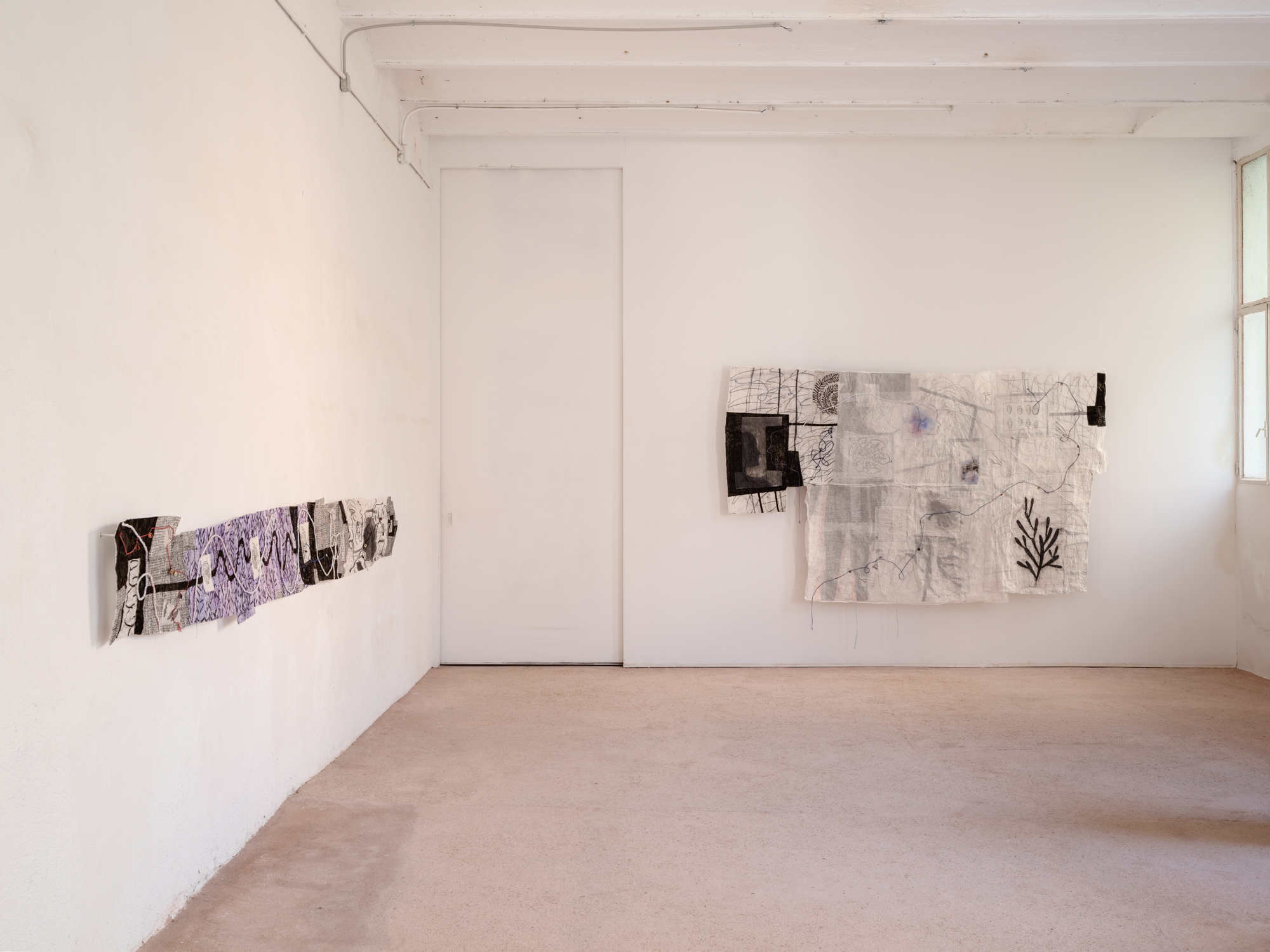
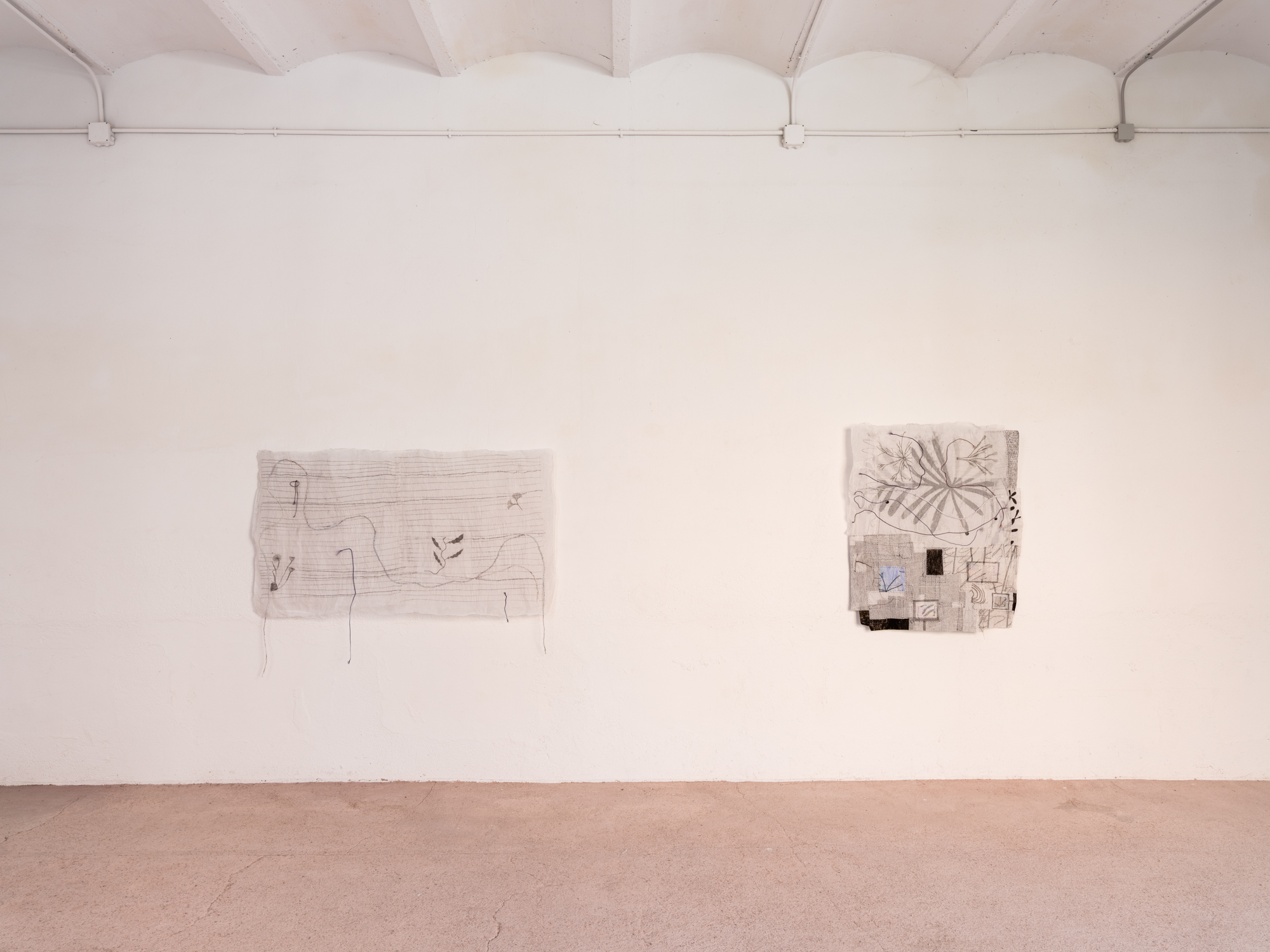
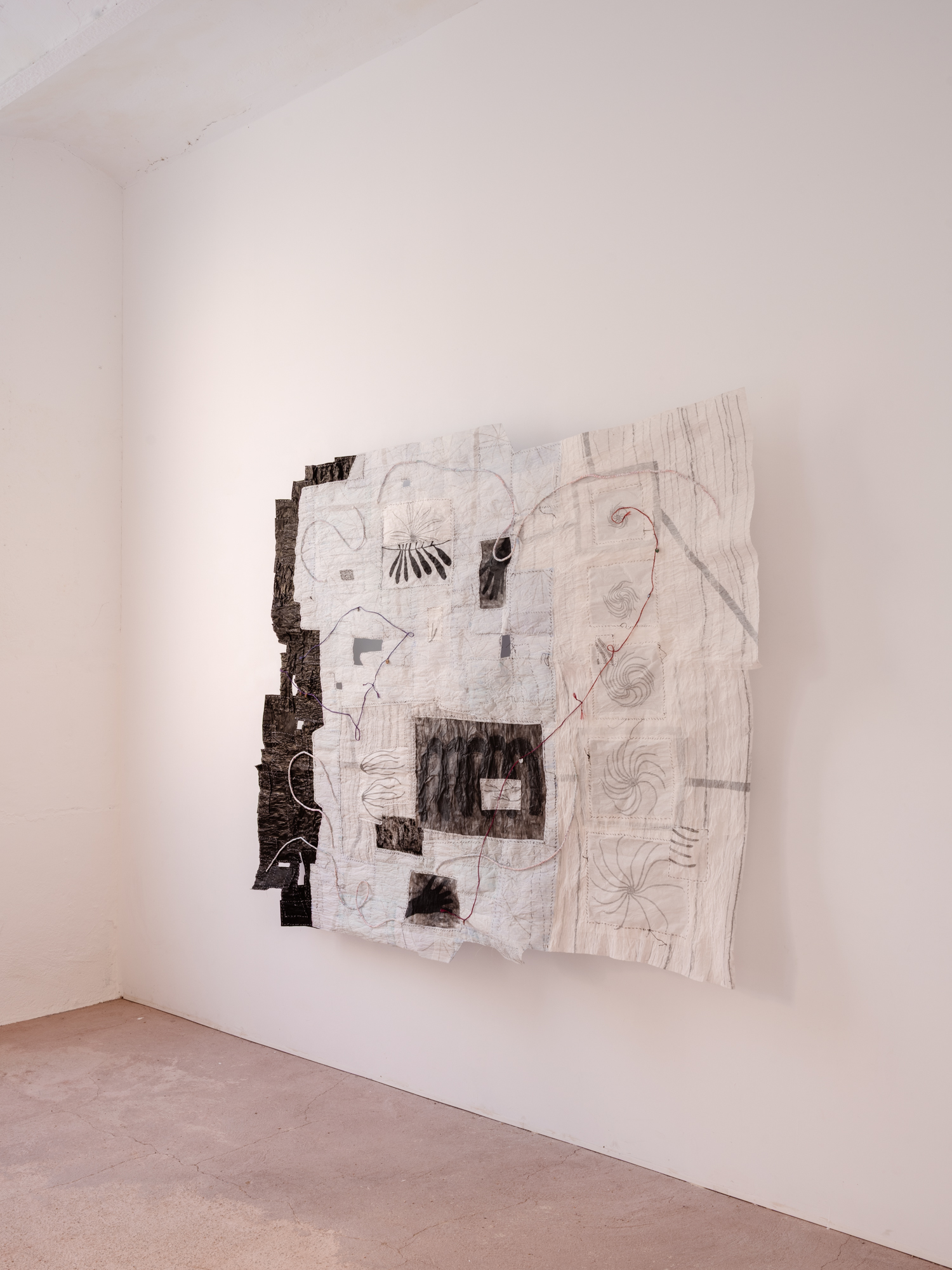
Stitching plays a central role in this articulation. It activates the surface, like drawn lines in motion; sewing becomes a form of drawing, patchwork a system of connections. Through processes of assembling and deconstructing, disparat fragments are joined into something new. In this sense, the act of stitching mirrors the attempt to connect different temporalities and experiences. Pieces consisting of charcoal, graphite and watercolor drawings on tracing paper, originating in different moments are brought together, creating a dialogue between past and present, between what
was once separated and what is now provisionally unified. And material further intensifies this dialogue: Gauze, reminiscent of bandages or mummy wrappings, evokes protection, healing, and preservation. Layers of fabric function like skins, membranes, or strata of memory. They carry connotations of fragility and care—of something wrapped, stored, or tended to over time. Material thus becomes not merely a medium, but a carrier of duration.
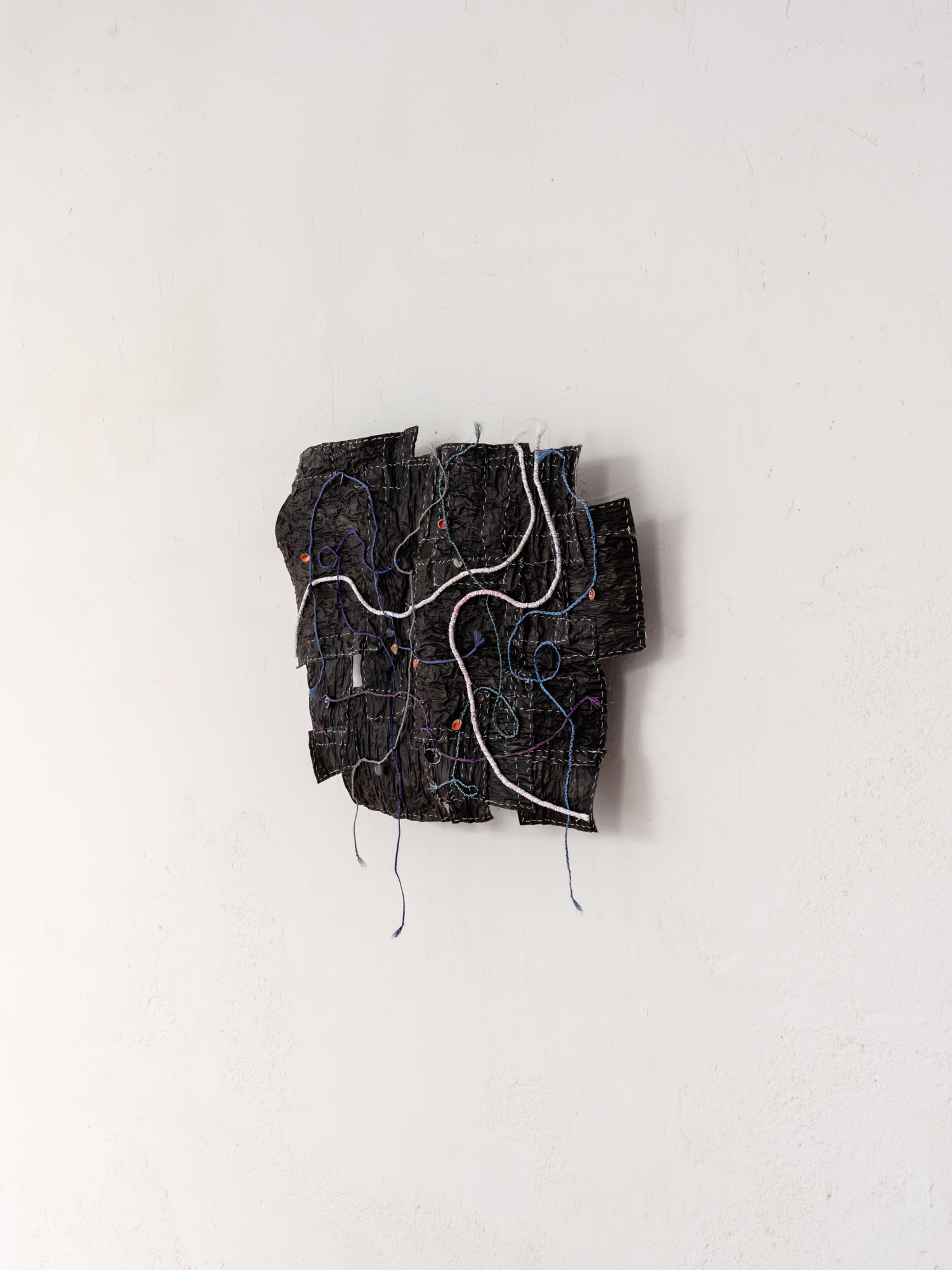
Within this dense fabric, small and seemingly incidental elements gain unexpected prominence, as in Mapa espectral – night sky. A micro-perspective emerges in which tiny fragments become significant (land)marks. Attention shifts toward the minor and peripheral, transforming the surface into a concentrated field of events where every stitch and every patch operate as a point of orientation. What unfolds is not a single linear story, but a continuous narrative that reveals itself gradually rather than all at once. Color functions as another subtle device within this system. Shining through the layers, hues expand into chromatic fields that act as signals within a larger energetic terrain, guiding the viewer through shifting moods or inner states. In this way, color participates in the same logic of layering and
emergence that structures the work as a whole.
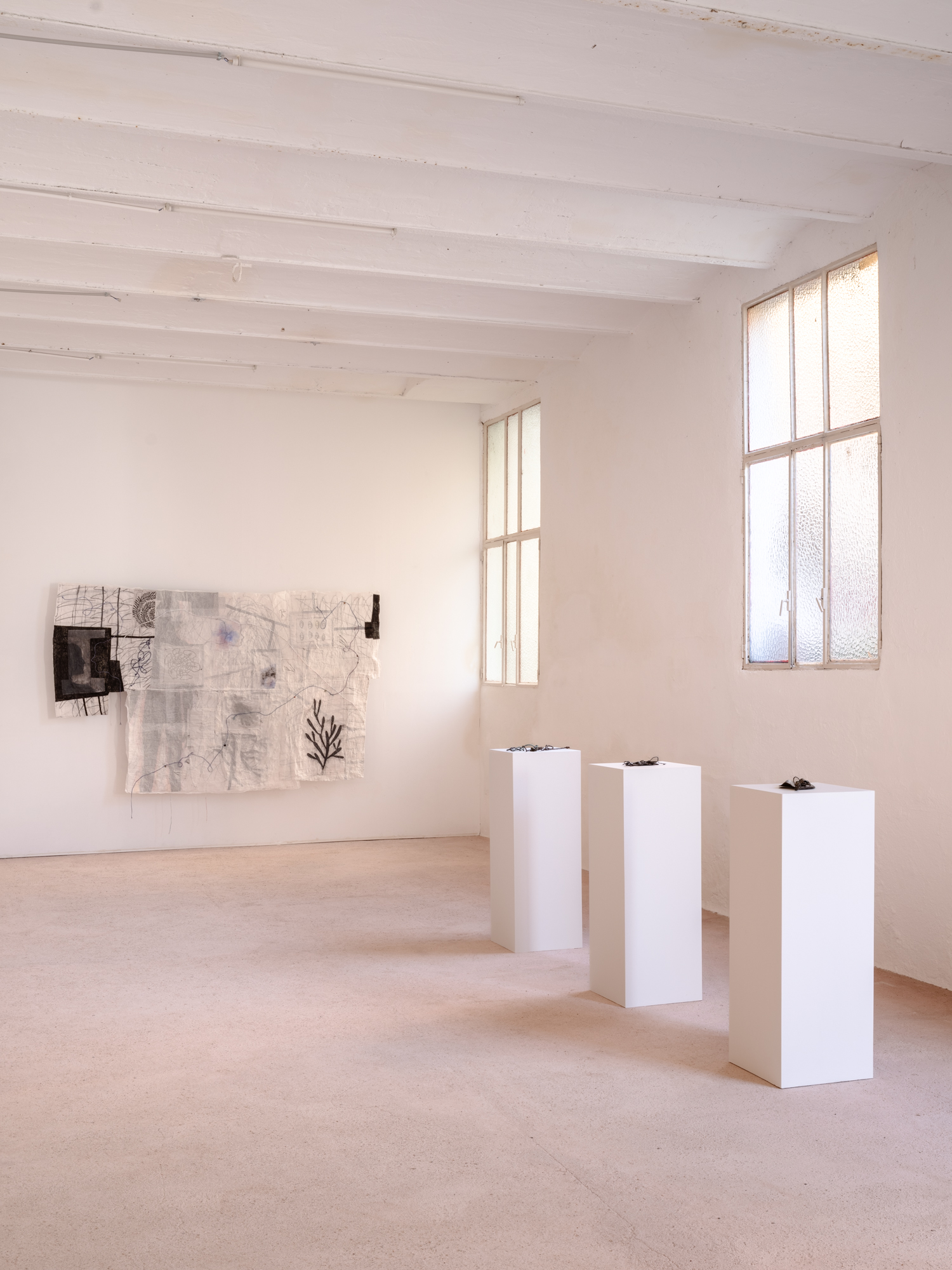
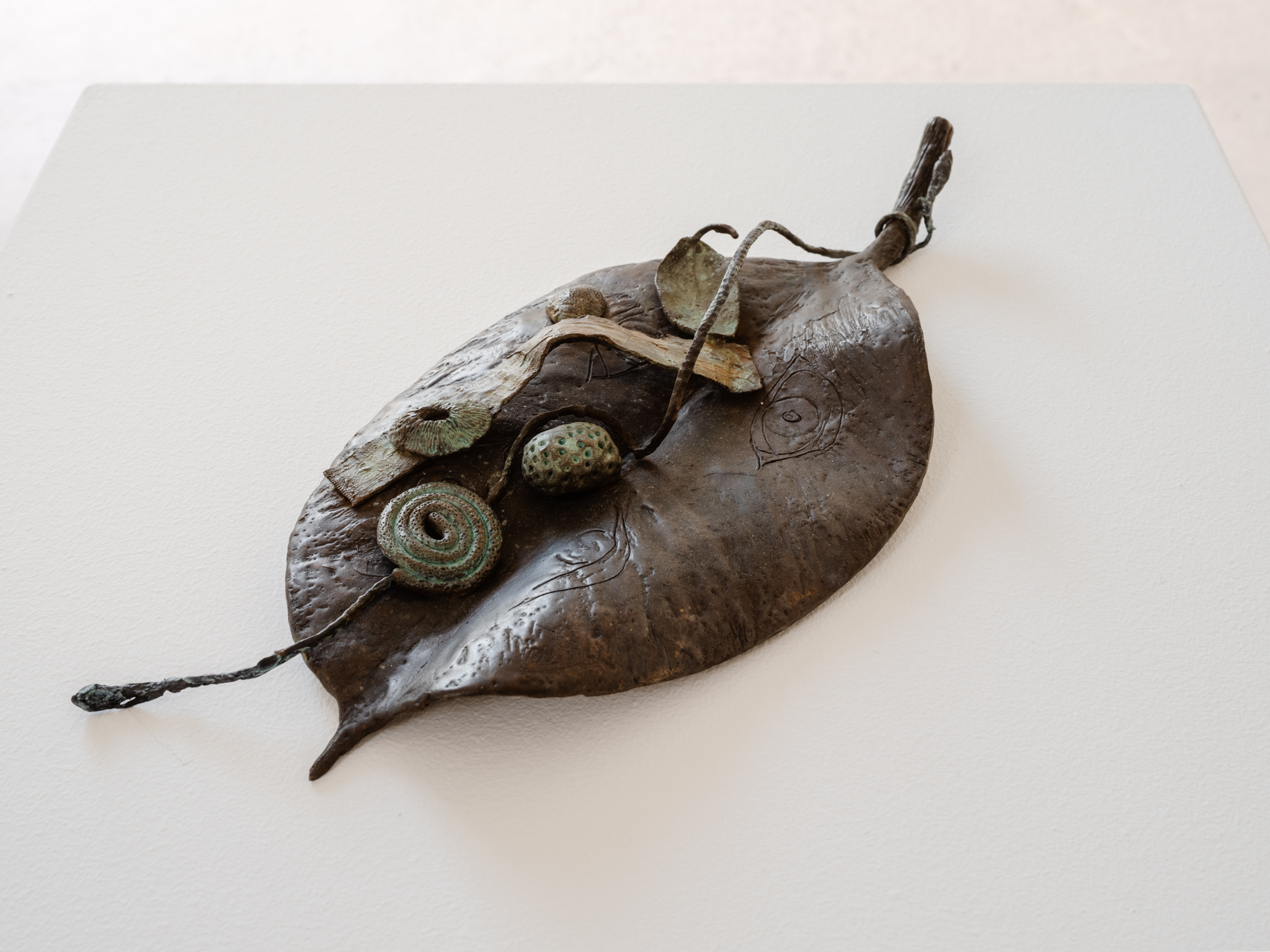
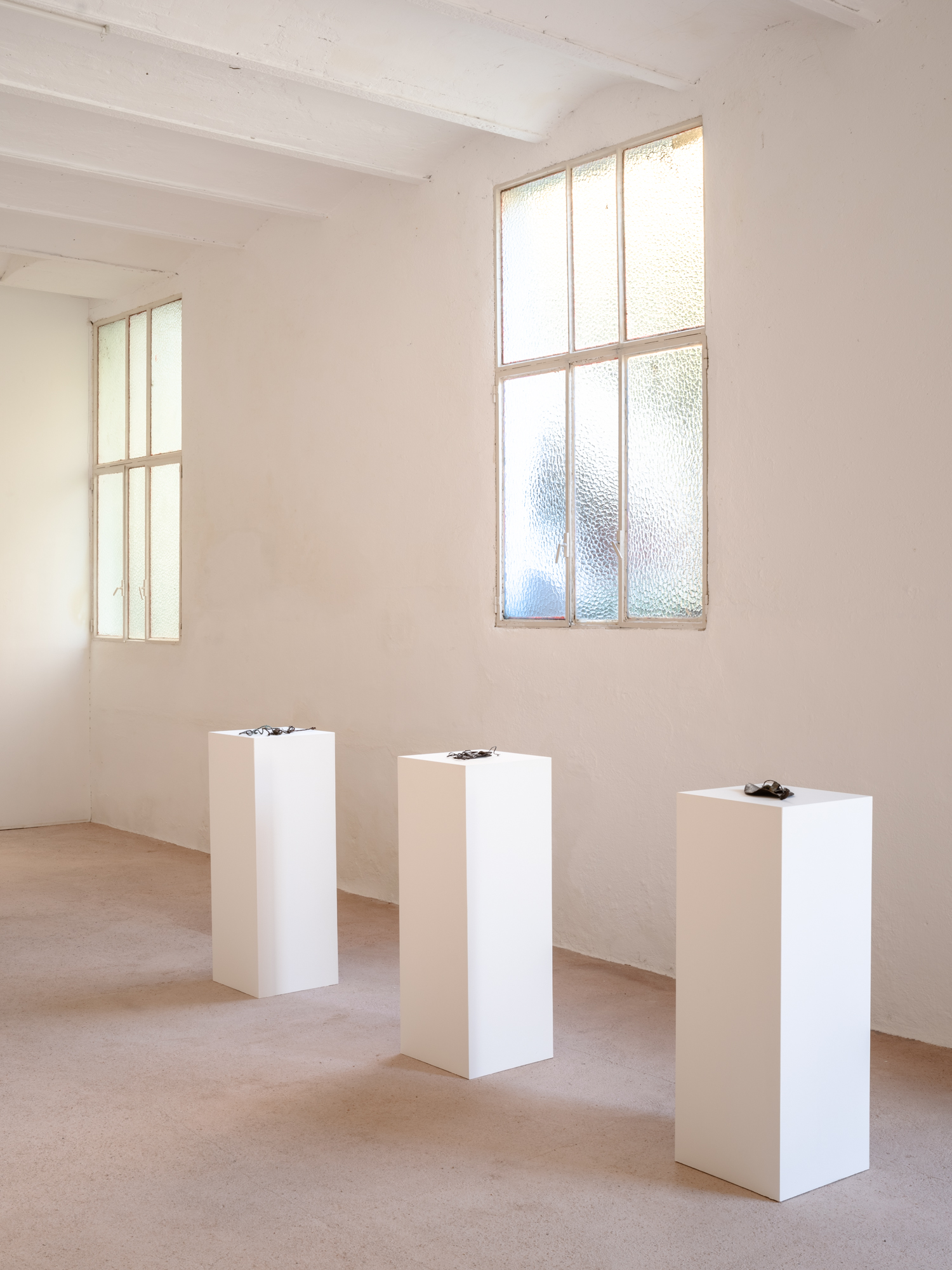
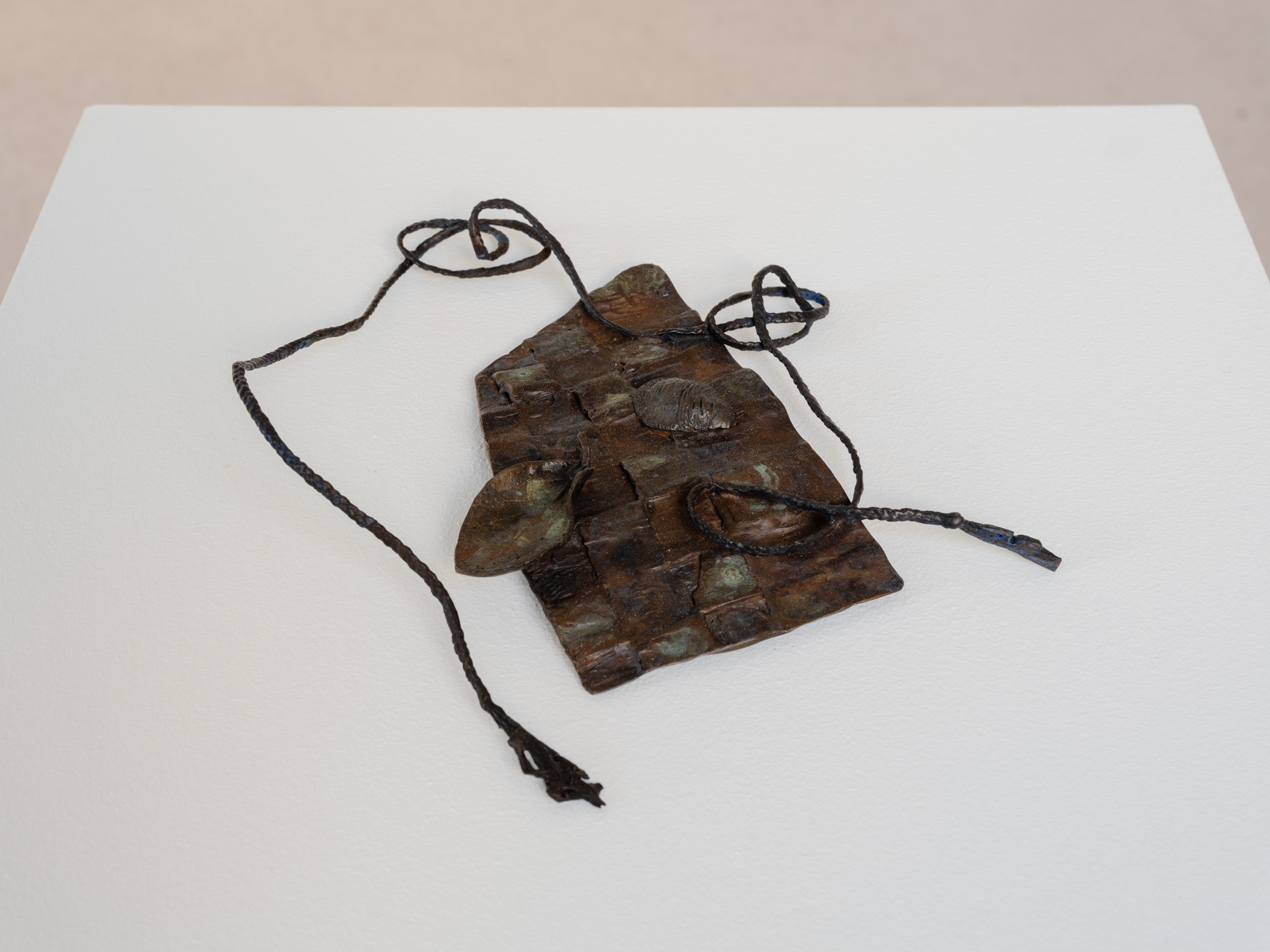
Shifting the gaze from the wall to the center of the gallery, we encounter three small-scale bronze sculptures on pedestals, a material used by the artist for the first time. In keeping with her desire to further explore the relationship between sculpture and drawing inherent in her work, the bronzes incorporate drawn elements, extending lines, structures, and gestures into three-dimensional space. In this way, they explore the threshold between surface and volume, image and object, and solidify the quick gesture of drawing.
Through her works, Isabel channels experiences, emotions, and temporal strata into tactile form. They do not simply represent journeys; they enact them. They become spectral voyages through space and time—through layered fields of perception in which surface and depth, past and present, remain inseparably intertwined.
Spectral Histories
The outcome of a time-intensive, meditative process, Isabel Nuño de Buen’s paper tapestries are put together from a large stock of handmade elements: notes, drawings on tracing paper, threaded cords, and ceramic tokens. Despite their slight appearance, the material input is far from negligible, not only in its amount but also in the sheer duration that each of these elements’ making encapsulates. Yet the drawings and notes are building blocks and braiding, or hand-shaping are only the first steps Nuño de Buen takes in searching for her chosen form of expression. This search – or to reference one of her older works from 2015, “organic research” – leads through a further series of actions such as cutting, pasting, layering, and stitching, to accumulations and aggregations of materials and patterns,
somewhere between palimpsest and quilt.
Displaying pictographic representations of flora, fauna, and the human body, the tapestries profess an affinity to the natural world, while their irregular shapes, turning away from a strict geometry, suggest an open-ended-ness that marks them as parts of a greater whole. This natural principle of interdependence, and of belonging and being nested into a larger scheme seems to guide the inner logic of Nuño de Buen’s works, rendering many of them expansive and expandable. So are her installations. Here, the walls are hung with differently sized tapestries. They form the lacunary composition of a sort of mosaic whose spectral fragments are now part of its narrative – a monumental landscape of patterns and silhouettes fading in and out of sight, of translucent surfaces revealing ghostly shapes and pigmentation underneath a thin membrane of paper stabilized with wound-dressing.
A recurring motif of scribbling is among the devices that connect the fragments. Albeit illegible, this reference to writing – here, as an automatic gesture from which the unconscious glimpses – consolidates the discreet but undeniable role it plays in Nuño de Buen’s practice. Her previous Codex works –talismanic “message in a bottle” objects, arrested between the suggestion of an immemorial provenance and the ever-delayed moment of their delivery – contain small notes, or letters, encased in fossil-like structures. Hidden from sight, this writing cannot be read either, but the series’ title – Codex – offers hints. It evokes the complex visual communication system of indigenous Mesoamerican manuscripts, as well as the socio-political, administrative, cartographic, and ritual roles they fulfilled, functioning both as records and guides. Hand-drawn maps, known as pinturas (paintings), and conceived at the cusp of the Pre-Columbian and Colonial eras, reveal a rich array of indigenous visual devices. They depict space as a lineage of social structures and a topography of communal relationships – in contrast to the European notion of a geometric representation of physical space that translated into real estate in the colonizer’s economic rationale.
If Isabel Nuño de Buen’s Codex works subtly invoke a time in which communal relationships shaped the understanding and representation of space, her new series of paper tapestries continues this thread as it places itself in a dialog with time-consuming, labor-intensive, and memory-bearing artisanal practices, such as quilting. Giving body to the most fragile paper, she weaves fragmentary representations of work
rhythms, impressions, and personal memories, that are at once inner landscapes and their cartography.
Melissa Canbaz y Mihaela Chiriac